
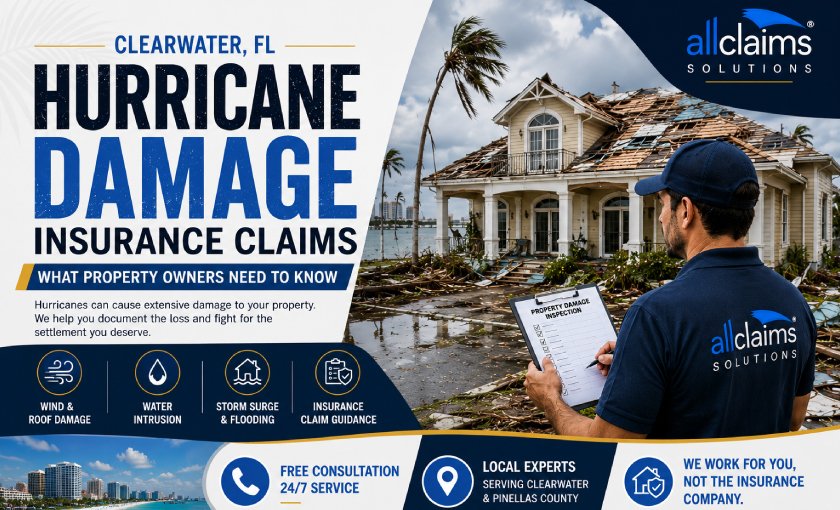
Hurricanes can cause extensive damage to homes, condos, commercial buildings, and other properties throughout Clearwater, FL. From roof and wind damage to water intrusion, flooding, broken windows, structural damage, and hidden moisture, a single storm can create multiple layers of property loss.
For Clearwater property owners, filing a hurricane damage insurance claim can also become complicated when different types of damage are involved.
Was the damage caused by wind? Rain? Storm surge? Flooding? A roof failure? Or a combination of several factors?
Understanding your insurance coverage, documenting the damage, and properly presenting your claim can make an important difference in how the loss is handled.
At All Claims Solutions, our Public Adjusters help property owners throughout Clearwater and surrounding Pinellas County communities document property damage and navigate the insurance claims process.
We work for you—not the insurance company.
Hurricane Damage in Clearwater: What Can Go Wrong?
Clearwater’s location along Florida’s Gulf Coast means properties can face several different types of hurricane-related risks.
A hurricane may cause:
- Roof damage
- Wind damage
- Broken windows and doors
- Water intrusion
- Ceiling and drywall damage
- Structural damage
- Damage to flooring and cabinets
- Mold resulting from water intrusion
- Damage to personal property
- Exterior property damage
- Landscaping and other property losses
- Business interruption
- Damage to commercial property
In coastal areas, storm surge and flooding can create additional challenges.
Pinellas County advises property owners to understand both their flood zone and evacuation zone because storm surge from hurricanes can create significant flooding risks.
Does Homeowners Insurance Cover Hurricane Damage in Clearwater?
One of the first questions property owners ask after a hurricane is:
“Will my insurance cover the damage?”
The answer depends on the specific insurance policy, the cause of the damage, applicable exclusions, deductibles, limits, and the circumstances surrounding the loss.
Different portions of a hurricane-related loss may also be treated differently.
For example, a policy may provide coverage for certain wind-related damage while flood damage may require separate flood insurance.
Pinellas County notes that most homeowners insurance policies do not cover losses caused by flooding, which makes understanding the distinction between flood damage and other types of hurricane damage particularly important for Clearwater property owners.
This is why property owners should avoid assuming that all hurricane damage is automatically covered—or automatically excluded.
The actual policy should be reviewed.
Wind Damage vs. Flood Damage After a Hurricane
This distinction can be especially important in Clearwater.
Wind Damage
Hurricane-force winds can damage:
- Roofing systems
- Shingles
- Roof membranes
- Windows
- Doors
- Exterior walls
- Fences
- Screens
- Other structures
Wind can also create openings that allow rainwater to enter the property.
Flood Damage
Flooding and storm surge are different risks.
Water entering a property because of rising water, storm surge, or flooding may fall under a separate flood insurance policy rather than a standard homeowners policy.
Pinellas County specifically explains that most homeowners policies do not cover flooding and encourages property owners to understand their flood risk and flood insurance needs.
Why This Matters
A hurricane loss can involve multiple causes of damage at the same property.
For example:
Hurricane Winds → Roof Damage → Rain Intrusion → Interior Water Damage
Understanding how each part of the loss occurred can be important when documenting and presenting an insurance claim.
Common Types of Hurricane Damage in Clearwater
1. Roof Damage
Roof damage is one of the most common concerns following a hurricane.
High winds can:
- Lift or damage shingles
- Damage flashing
- Break tiles
- Damage roof membranes
- Create openings
- Damage vents
- Cause structural problems
Some roof damage may not be obvious from the ground.
That is why a professional inspection can be important after a major storm.
2. Water Intrusion
Once a hurricane damages the roof, windows, doors, or exterior walls, rainwater can enter the property.
Water may damage:
- Ceilings
- Drywall
- Flooring
- Cabinets
- Insulation
- Electrical components
- Personal property
Water can also travel into areas that are not immediately visible.
3. Hidden Moisture and Mold
Not all hurricane damage is immediately visible.
Water can remain behind drywall, beneath flooring, inside walls, or in other concealed areas.
If moisture is not properly identified and addressed, additional damage may develop.
This can make mold and secondary water damage an important consideration when evaluating a hurricane insurance claim.
4. Window and Door Damage
High winds and flying debris can damage:
- Windows
- Sliding glass doors
- Exterior doors
- Frames
- Screens
- Garage doors
Broken openings can allow additional rainwater into the property.
5. Structural Damage
Severe hurricanes can affect structural components of a property.
Depending on the circumstances, damage may involve:
- Roof framing
- Exterior walls
- Interior walls
- Ceilings
- Supporting structures
- Attached structures
Structural concerns should be evaluated by appropriately qualified professionals.
What Should You Do After Hurricane Damage in Clearwater?
If your property has suffered hurricane damage, taking organized steps can help protect the claim.
Step 1: Make Sure Everyone Is Safe
Your first priority should always be the safety of occupants.
Do not enter areas that may be structurally unsafe or contain electrical hazards.
Step 2: Prevent Additional Damage When Reasonably Possible
Florida law requires policyholders to take reasonable measures to protect property from further damage in appropriate circumstances.
Examples may include:
- Covering damaged areas
- Boarding broken windows
- Removing standing water when safe
- Arranging emergency repairs
- Protecting undamaged property
Keep receipts and records of emergency expenses.
Step 3: Photograph and Record the Damage
Take detailed photos and videos of:
- Roof damage
- Broken windows
- Water intrusion
- Ceiling damage
- Flooring
- Walls
- Personal property
- Exterior damage
- Landscaping
- Fences
- Other structures
If possible, document the property before permanent repairs or disposal of damaged materials.
Step 4: Keep All Documentation
Create a folder containing:
- Insurance policy
- Photos and videos
- Contractor estimates
- Emergency repair invoices
- Receipts
- Inspection reports
- Mitigation documentation
- Correspondence with the insurance company
- Claim numbers
- Adjuster information
Good documentation can make it easier to establish the scope of the loss.
How Long Do You Have to File a Hurricane Insurance Claim in Florida?
This is one of the most important sections for SEO and for users because claim deadlines can affect their rights.
Under the current Florida statute, an initial property insurance claim or reopened claim generally must be reported within one year after the date of loss, while a supplemental claim generally must be reported within 18 months. For hurricane and other specified weather-related losses, the date of loss is tied to the hurricane’s landfall or the verified weather event. The policy’s requirements also matter.
Florida’s Department of Financial Services similarly explains that current law provides a one-year period for initial claims and an 18-month period for supplemental claims after the relevant hurricane or windstorm loss.
Important:
Do not wait until the deadline approaches.
If you discover additional damage months after a hurricane, it may be important to determine whether that damage should be addressed through a supplemental or reopened claim and whether the applicable deadline has passed.
Because individual policies and circumstances can differ, property owners should review their policy and seek qualified professional guidance regarding their specific situation.
Understanding Your Hurricane Deductible
Another important issue is the hurricane deductible.
Florida law allows residential property insurance policies to contain hurricane-specific deductibles, including percentage-based deductibles. Certain residential policies must offer specified deductible options, subject to statutory requirements and exceptions.
A percentage deductible can make a substantial difference in a large hurricane claim.
For example, a policy with a 2% hurricane deductible applies that percentage to the applicable policy limit—not simply to the repair estimate.
This is one reason property owners should understand their declarations page and policy before assuming what their out-of-pocket responsibility will be.
What If the Insurance Company’s Estimate Seems Too Low?
Sometimes the first insurance estimate does not appear to account for everything damaged by the hurricane.
Property owners may discover:
- Additional roof damage
- Hidden water damage
- Damaged insulation
- Structural issues
- Code-related requirements
- Damaged personal property
- Additional repair costs
- Damage discovered during repairs
A low estimate does not necessarily mean the claim is finished.
The important question is whether the estimate accurately reflects the documented scope of the covered loss.
If additional damage is discovered, it may be appropriate to provide additional documentation or pursue a supplemental claim when permitted.
Common Hurricane Insurance Claim Mistakes Clearwater Property Owners Should Avoid
1. Waiting Too Long to Report the Loss
Claim deadlines matter.
Current Florida law generally provides one year for an initial or reopened property claim and 18 months for a supplemental claim, subject to applicable requirements.
2. Assuming Everything Is Flood Damage
A hurricane can cause multiple types of damage.
Wind, rain intrusion, storm surge, and flooding are not necessarily treated the same way under insurance policies.
3. Accepting the First Estimate Without Reviewing It
An initial estimate may not include every component of the loss.
Review the scope of damage carefully before assuming the claim is complete.
4. Failing to Document Hidden Damage
Visible damage may only represent part of the total loss.
Water can travel behind walls, ceilings, cabinets, and flooring.
5. Making Permanent Repairs Before Proper Documentation
Emergency repairs may be necessary, but whenever reasonably possible, document the damage before removing or replacing damaged materials.
6. Not Understanding the Hurricane Deductible
A percentage-based hurricane deductible can have a significant financial impact.
Review your policy declarations and understand how your deductible applies.
What If Your Hurricane Insurance Claim Is Denied?
A claim denial does not necessarily mean there is nothing else you can do.
Insurance claims can be denied for different reasons, including disputes about:
- Cause of loss
- Coverage
- Policy exclusions
- Deductibles
- Scope of damage
- Maintenance
- Wear and tear
- Flood versus wind
- Documentation
- Timing
If your hurricane insurance claim in Clearwater has been denied, carefully review the insurer’s explanation and your policy.
A licensed Public Adjuster can help evaluate the documented property damage and insurance claim before determining the appropriate next steps.
Can a Public Adjuster Help With a Hurricane Damage Claim?
Yes.
A Public Adjuster represents the policyholder, rather than the insurance company, in the property insurance claims process.
For a complex hurricane loss, a Public Adjuster can help with:
Property Inspection
Identifying and documenting visible property damage.
Damage Documentation
Organizing photographs, measurements, estimates, reports, and other claim documentation.
Policy Review
Reviewing the applicable insurance policy to identify relevant coverage, exclusions, deductibles, and limitations.
Claim Preparation
Helping prepare documentation supporting the scope of the property loss.
Insurance Company Communication
Assisting with claim-related communication and documentation.
Claim Negotiation
Representing the policyholder during discussions concerning the documented loss and applicable coverage.
Hurricane Insurance Claims for Clearwater Condos
Clearwater has a significant number of condominium properties, including properties near coastal and waterfront areas.
A hurricane can create complicated claims involving:
- Individual units
- Common areas
- Roof systems
- Exterior walls
- Windows
- Elevators
- HVAC systems
- Water intrusion
- Association property
- Personal property
- Loss assessments
For condominium owners and associations, determining which policy covers which portion of the damage can become particularly important.
This is an area where specialized claim documentation can be valuable.
Hurricane Insurance Claims for Clearwater Businesses
Hurricane damage doesn’t only affect homeowners.
Businesses can experience:
- Building damage
- Roof damage
- Equipment damage
- Inventory loss
- Water damage
- Temporary closures
- Relocation expenses
- Loss of income
- Business interruption
For a commercial property owner, the financial impact of a hurricane can extend well beyond the cost of repairing the building.
That’s why commercial property claims should consider both physical damage and potential business interruption losses, depending on the applicable policy.
Clearwater Beach and Waterfront Properties
Properties near Clearwater Beach and other coastal areas can face unique hurricane-related risks.
Potential concerns include:
- Wind
- Heavy rainfall
- Storm surge
- Flooding
- Saltwater exposure
- Roof damage
- Water intrusion
- Exterior damage
Pinellas County emphasizes that storm surge is a key factor in hurricane evacuation planning and encourages residents to understand their flood and evacuation zones.
For waterfront property owners, understanding the difference between hurricane, wind, rain, and flood damage can be particularly important when evaluating insurance coverage.
How All Claims Solutions Helps With Hurricane Insurance Claims in Clearwater
At All Claims Solutions, our Public Adjusters help Clearwater property owners navigate the insurance claims process after property damage.
Our approach focuses on:
Inspecting the property
↓
Documenting the damage
↓
Reviewing the insurance policy
↓
Preparing the claim
↓
Communicating with the insurance company
↓
Negotiating the documented loss
Our goal is to help property owners understand their claim and ensure that the documented scope of damage is properly presented.
We Work for You—not the Insurance Company.
Frequently Asked Questions About Hurricane Insurance Claims in Clearwater
It depends on the specific policy and the cause of the damage. Wind-related losses, flood damage, storm surge, and other types of hurricane-related damage may be treated differently.
Storm surge is generally considered flood damage, and standard homeowners insurance typically does not cover flooding. Pinellas County specifically advises property owners that most homeowners policies do not cover flood losses.
Wind coverage may be included in a property insurance policy, but the specific coverage, exclusions, limits, and hurricane deductible depend on the policy.
Under current Florida law, an initial property claim or reopened claim generally must be reported within one year of the date of loss, while a supplemental claim generally must be reported within 18 months, subject to applicable policy terms and statutory requirements.
Additional damage may potentially be addressed through a supplemental or reopened claim depending on the circumstances, policy, and applicable deadlines.
A Public Adjuster may be helpful when a claim is complex, involves significant damage, has multiple types of loss, or requires extensive documentation and negotiation.
A licensed Public Adjuster can evaluate the documented property loss and help with the claims process. Whether additional action is appropriate depends on the policy, claim history, and circumstances.
Get Help With a Hurricane Insurance Claim in Clearwater, FL
Hurricane damage can be overwhelming, especially when a single storm creates roof damage, water intrusion, structural damage, mold, personal property losses, and business interruption.
You don’t have to navigate the claims process alone.
All Claims Solutions provides Public Adjuster services for property owners in Clearwater and surrounding Pinellas County communities.
If your property has suffered hurricane damage, contact our Clearwater team for a free consultation and claim evaluation.
All Claims Solutions — Clearwater Public Adjusters
We Work for You—not the Insurance Company.
No Recovery – No Fee.
Insurance coverage varies by policy and circumstances. This article is provided for general informational purposes and does not constitute legal advice or a determination of insurance coverage.






[…] Hurricane Damage Insurance Claims in Clearwater, FL: What Property Owners Need to Know Roof Damage Insurance Claims in Clearwater, FL: What Homeowners Need to Know Water Damage Insurance Claims in Clearwater, FL: What Property Owners Need to Know 0Shares […]
[…] Hurricane Damage Insurance Claims in Clearwater, FL: What Property Owners Need to Know Roof Damage Insurance Claims in Clearwater, FL: What Homeowners Need to Know Water Damage Insurance Claims in Clearwater, FL: What Property Owners Need to Know […]
[…] Hurricane Damage Insurance Claims in Clearwater, FL: What Property Owners Need to Know Roof Damage Insurance Claims in Clearwater, FL: What Homeowners Need to Know Water Damage Insurance Claims in Clearwater, FL: What Property Owners Need to Know […]
[…] Learn more about Hurricane Damage Insurance Claims in Clearwater […]
[…] Hurricane Damage Insurance Claims in Clearwater, FL […]
[…] Related: [Hurricane Damage Insurance Claims in Clearwater, FL] […]