
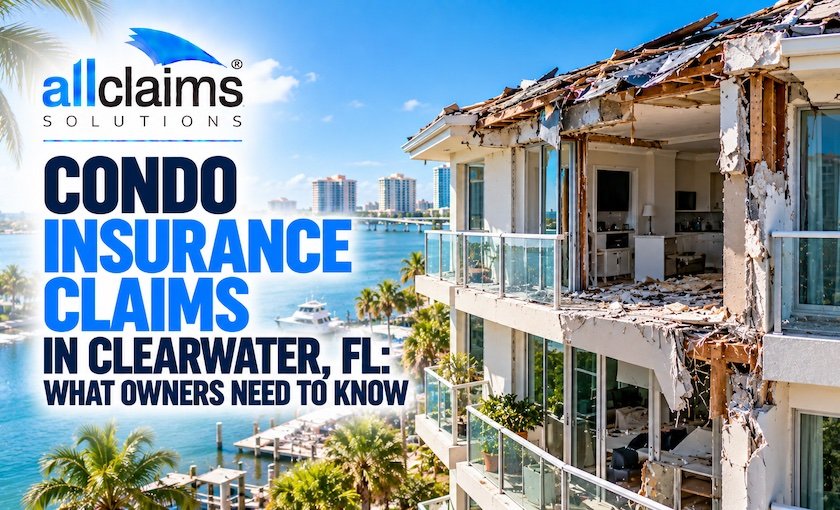
Condominium insurance claims can be more complicated than a typical homeowners insurance claim because more than one insurance policy may be involved.
When a Clearwater condominium is damaged by a hurricane, windstorm, water intrusion, fire, roof issue, or another covered event, the first question is often:
Is the damage covered by the condo association’s insurance policy or by the individual unit owner’s policy?
The answer depends on what was damaged, where it is located, the condominium’s governing documents, the applicable insurance policies, and the circumstances of the loss.
Florida law requires condominium associations to maintain certain property insurance, while individual unit owners generally have their own condominium unit-owner policies, commonly known as HO-6 policies. The two types of coverage serve different purposes.
For condo owners in Clearwater, understanding this distinction can make a significant difference when documenting and pursuing a property insurance claim.
How Does Condo Insurance Work in Florida?
Condominium insurance is generally divided between association coverage and individual unit-owner coverage.
The condominium association maintains insurance for property it is responsible for insuring under Florida condominium law and the governing documents.
The individual unit owner typically has an HO-6 condominium unit-owner policy covering property and interests that fall under the owner’s responsibility.
According to the Florida Department of Financial Services, an HO-6 policy primarily covers the unit owner’s personal property and liability while also providing certain coverage for the unit itself.
Florida’s condominium statute also establishes insurance responsibilities for associations and unit owners. Among other things, the association’s required property insurance generally covers specified condominium property, while certain items located within the unit—such as personal property, floor, wall and ceiling coverings, appliances, built-in cabinets and countertops, and certain fixtures—are generally the unit owner’s responsibility to insure.
However, the exact responsibility can depend on the condominium’s declaration, governing documents, policy language, and the circumstances of the loss.
What Is an HO-6 Insurance Policy?
An HO-6 policy is a type of residential insurance policy designed for condominium unit owners.
It can provide coverage for areas such as:
- Personal belongings
- Certain portions or improvements within the unit
- Personal liability
- Additional living expenses, when applicable
- Loss assessment coverage
- Other coverages specified by the policy
The exact coverage depends on the individual policy.
Florida DFS explains that condo unit-owner policies normally cover named perils, although broader coverage may be available through an endorsement depending on the policy.
This is why condo owners should not assume that every type of damage inside a unit is automatically covered.
What Is the Condo Association’s Master Insurance Policy?
The condominium association generally maintains a master property insurance policy for property the association is responsible for insuring.
This can involve:
- Common areas
- Common elements
- Building components
- Certain structural elements
- Property required to be insured by the association
- Other property specified by Florida law and the condominium documents
Florida law requires condominium associations to maintain adequate property insurance for applicable condominium property and establishes specific insurance responsibilities for associations.
The master policy is not a replacement for an individual unit owner’s insurance policy.
A condo owner may need both forms of coverage because they protect different interests.
Who Is Responsible for Condo Damage?
This is one of the most important questions after a condominium loss.
The answer depends on what was damaged and which party is responsible for that property under the applicable documents and policies.
For example:
Damage to common elements
Damage involving common elements may fall under the association’s responsibilities and insurance, depending on the circumstances.
Damage inside the unit
Certain interior components may fall under the individual owner’s responsibility.
Personal belongings
Furniture, electronics, clothing, appliances, and other personal property may fall under the owner’s HO-6 policy, subject to its terms and limits.
Improvements or alterations
Owner-installed improvements may require special consideration because responsibility can depend on the nature of the improvement and the condominium documents.
Water damage
A water loss can be particularly complicated because the source of the water, location of the damage, negligence issues, and applicable policies can all affect the claim.
Do not assume that the location of the damage alone determines which policy applies.
Common Types of Condo Insurance Claims in Clearwater
Clearwater condominiums can face many of the same property risks as single-family homes, but the insurance claim process can involve additional layers of responsibility.
Hurricane and Wind Damage
Storms and hurricanes can damage:
- Roofs
- Windows
- Exterior walls
- Balconies
- Common areas
- Interior ceilings
- Walls
- Flooring
- Personal property
After a major storm, the association and individual unit owners may need to coordinate their documentation and insurance claims.
Related: [Hurricane Damage Insurance Claims in Clearwater, FL]
Water Damage
Water losses are among the most common and potentially complicated condominium claims.
Potential sources include:
- Burst pipes
- Plumbing leaks
- Appliance failures
- Roof leaks
- Water intrusion
- HVAC leaks
- Sprinkler systems
- Overflowing fixtures
Determining the source of the water is often critical.
A leak originating from one unit can potentially affect neighboring units or common elements, creating questions about responsibility, coverage, and documentation.
Related: [Water Damage Insurance Claims in Clearwater, FL]
Fire and Smoke Damage
A condominium fire can affect much more than the unit where the fire originated.
Smoke, soot, water used to extinguish the fire, and odor can spread into surrounding areas.
Potentially affected property may include:
- Unit interiors
- Common areas
- Personal belongings
- Building components
- Electrical systems
- Flooring
- Cabinets
- Walls and ceilings
Related: [Fire Damage Insurance Claims in Clearwater, FL]
Structural Damage
Structural damage can involve:
- Roof structures
- Exterior walls
- Load-bearing components
- Foundations
- Framing
- Structural systems
When structural issues occur in a condominium, the distinction between association responsibility and unit-owner responsibility can become particularly important.
Related: [Structural Damage Insurance Claims in Clearwater, FL]
What Is Loss Assessment Coverage?
One of the most important coverages for Florida condo owners is loss assessment coverage.
Loss assessment coverage can help protect an individual unit owner when the condominium association assesses owners for certain covered losses.
Florida law requires qualifying residential condominium unit-owner policies to include at least $2,000 of property loss assessment coverage, subject to statutory conditions and a deductible of no more than $250 for the specified direct property loss.
However, the actual amount available to an owner depends on the policy and applicable circumstances.
For example, a condominium association could experience a covered property loss that results in an assessment to unit owners.
Whether an individual owner’s loss assessment coverage applies depends on the nature of the loss, the policy, the assessment, and the statutory requirements.
What Happens If the Condo Association’s Insurance Isn’t Enough?
This is another situation that can create confusion for unit owners.
Florida condominium law addresses how certain deductibles and damages exceeding association insurance coverage are treated. Under the current statute, certain property insurance deductibles and damages in excess of association property insurance coverage are generally treated as a common expense, subject to statutory exceptions and the association’s governing documents.
A unit owner should therefore carefully review:
- The association’s insurance policy
- The association’s insurance claim
- The assessment notice
- The condominium declaration
- The association’s bylaws
- The owner’s HO-6 policy
- Loss assessment coverage
- The cause of loss
A large assessment should not simply be assumed to be the responsibility of the individual owner without reviewing the applicable documents.
What Should You Do After Condo Damage?
If your Clearwater condominium is damaged, taking organized steps early can make the claim easier to evaluate.
1. Protect People First
If the property is unsafe, leave the affected area and follow emergency instructions.
Do not enter an unsafe structure simply to document damage.
2. Notify the Condo Association
If the loss could involve common elements or building components, notify the condominium association or property manager promptly.
Keep a record of:
- Who you contacted
- Date and time
- What was reported
- Any instructions received
3. Notify Your Insurance Company
If your unit or personal property has been damaged, contact your HO-6 insurance carrier according to the requirements of your policy.
Do not assume that because the association has filed a claim, you do not need to notify your own insurer.
The two claims may involve different property and different coverage.
4. Document the Damage
Take photographs and videos of:
- Every affected room
- Walls
- Ceilings
- Floors
- Cabinets
- Fixtures
- Personal belongings
- Visible water intrusion
- Exterior damage
- Common-area damage, when accessible and appropriate
If possible, document the property before cleanup or removal of damaged materials.
5. Prevent Further Damage
Take reasonable temporary measures to prevent additional damage when it is safe to do so.
Keep receipts and documentation for emergency services, temporary repairs, lodging, or other potentially relevant expenses.
What Information Should Condo Owners Collect?
Create a dedicated claim file containing:
Your insurance documents
- HO-6 policy
- Declarations page
- Claim number
- Deductible information
- Insurance correspondence
- Insurance estimate
Condo documents
- Declaration of condominium
- Bylaws
- Rules
- Association insurance information
- Master policy information, when available
- Assessment notices
Damage documentation
- Photos
- Videos
- Inspection reports
- Contractor estimates
- Restoration company reports
- Receipts
- Invoices
- Inventory of damaged belongings
This information can help establish what happened, what was damaged, who may be responsible, and which policy may apply.
What If the Insurance Company Underpays the Condo Claim?
Sometimes a condominium claim is accepted but the unit owner believes the payment is not enough to restore the covered property.
Potential reasons can include:
- Damage not fully documented
- Missing repair items
- Incorrect quantities
- Incomplete scope of work
- Additional damage discovered during repairs
- Disagreement about the cause of damage
- Differences between the insurer’s estimate and restoration costs
- Coverage disputes
A low payment does not automatically mean that the insurer acted improperly.
The claim should be reviewed against the policy language, documented damage, applicable condominium responsibilities, and repair requirements.
For a deeper explanation, see:
[Underpaid Insurance Claims in Clearwater, FL: What Property Owners Should Know]
What If the Condo Insurance Claim Is Denied?
A denied claim does not necessarily mean there are no further options.
First, determine why the claim was denied.
The denial could relate to:
- A coverage exclusion
- Policy conditions
- Cause of loss
- Lack of documentation
- Late notice
- Maintenance issues
- Disputed responsibility
- Another policy provision
Review the denial letter carefully and compare the stated reason with the policy language and evidence surrounding the loss.
Related: [Denied Insurance Claims in Clearwater, FL]
When Should a Clearwater Condo Owner Consider a Public Adjuster?
A public adjuster represents the policyholder, not the insurance company.
For a condominium owner, professional claim assistance may be worth considering when a claim involves:
- Extensive property damage
- Multiple rooms or areas
- Significant water damage
- Hurricane or storm damage
- Fire and smoke damage
- A complicated scope of repairs
- A large difference between estimates
- An underpaid claim
- Additional damage
- A disputed claim
A public adjuster can assist with documenting and presenting the policyholder’s claim and communicating with the insurer.
However, hiring a public adjuster does not guarantee a particular settlement amount.
Florida requires public adjusters to be licensed, and property owners should review licensing, contracts, fees, and cancellation provisions before hiring one.
A Simple Condo Insurance Claim Checklist
After a loss, Clearwater condo owners can use this checklist:
☐ Ensure everyone is safe
☐ Prevent further damage when reasonably possible
☐ Notify the condo association
☐ Notify your HO-6 insurer
☐ Photograph and video the damage
☐ Document damaged personal belongings
☐ Keep receipts and invoices
☐ Request relevant association insurance information
☐ Obtain the insurer’s estimate
☐ Review the coverage and exclusions
☐ Compare repair estimates
☐ Document additional damage
☐ Keep all communications
☐ Watch applicable claim deadlines
☐ Consider professional claim assistance if the situation becomes complicated
Get Help With a Condo Insurance Claim in Clearwater, FL
A condominium insurance claim can involve more than simply filing a claim with your insurance company.
Understanding the difference between the association’s master policy and your individual HO-6 policy can be an important first step in determining how your property damage should be addressed.
At ALL Claims Solutions, our licensed public adjusters represent policyholders—not insurance companies.
We can help property owners document and present insurance claims involving:
- Hurricane damage
- Storm damage
- Water damage
- Fire damage
- Structural damage
- Other covered property losses
If you are dealing with a complicated condo insurance claim in Clearwater, our team can review the circumstances and help you understand the next steps available to you.
Get a Free Insurance Claim Evaluation
ALL Claims Solutions – Clearwater
📞 24/7: (727) 336-0627
📧 info@all-claims.com
📍 600 Cleveland St., Suite 382, Clearwater, FL 33755
We Work for YOU, Not Insurance Companies.
No Recovery – No Fee.
Insurance coverage depends on the applicable policy, condominium governing documents, cause of loss, exclusions, deductibles, limits, and individual circumstances. This article is for general informational purposes and is not legal advice or a determination of coverage.
Frequently Asked Questions
Yes. Condo owners generally have their own unit-owner policy, commonly called an HO-6 policy, in addition to the condominium association’s insurance. The two policies generally cover different property and interests.
An HO-6 policy can provide coverage for personal property, liability, certain portions or improvements within the unit, loss assessment, and other coverages specified by the policy. The exact coverage varies by policy.
Not necessarily. Florida law establishes specific insurance responsibilities for condominium associations and unit owners. Certain property inside the unit is generally the owner’s responsibility to insure, subject to the law, condominium documents, and applicable policies.
It depends on the source of the water, what property was damaged, the condominium documents, applicable insurance policies, and the circumstances of the loss. A water loss should not automatically be assumed to be the responsibility of either the unit owner or the association.
Loss assessment coverage can help an individual condo owner with certain assessments resulting from covered property losses, subject to the policy and statutory requirements. Florida law requires qualifying unit-owner policies to include at least $2,000 of property loss assessment coverage, subject to specified conditions.
Under current Florida law, an initial or reopened property insurance claim generally must be noticed within one year after the date of loss, while a supplemental claim generally must be noticed within 18 months. Loss assessment claims have separate statutory timing rules.
A licensed public adjuster can represent the policyholder and assist with documenting, preparing, and presenting an insurance claim. Whether professional assistance is appropriate depends on the complexity and circumstances of the claim.
Get Help With Your Clearwater Insurance Claim
Choosing a public adjuster is an important decision, particularly when a property loss is extensive or complicated.
At All Claims Solutions, our licensed Public Adjusters work for the policyholder—not the insurance company.
We help Clearwater property owners with residential and commercial insurance claims involving water, fire, storm, hurricane, roof, mold, structural, and other covered property losses.
If you are considering professional claim assistance, you can start with a Free Insurance Claim Evaluation.
All Claims Solutions – Clearwater
📍 600 Cleveland St., Suite 382, Clearwater, FL 33755
📞 24/7: 727-336-0627
🌐 clearwater.allclaimssolutions.com
✉️ info@all-claims.com
No Recovery – No Fee.
This article is for general informational purposes only and does not constitute legal advice or a determination of insurance coverage. Insurance coverage depends on the specific policy, endorsements, exclusions, deductibles, limits, and circumstances of the loss. Florida insurance laws and requirements may change.