
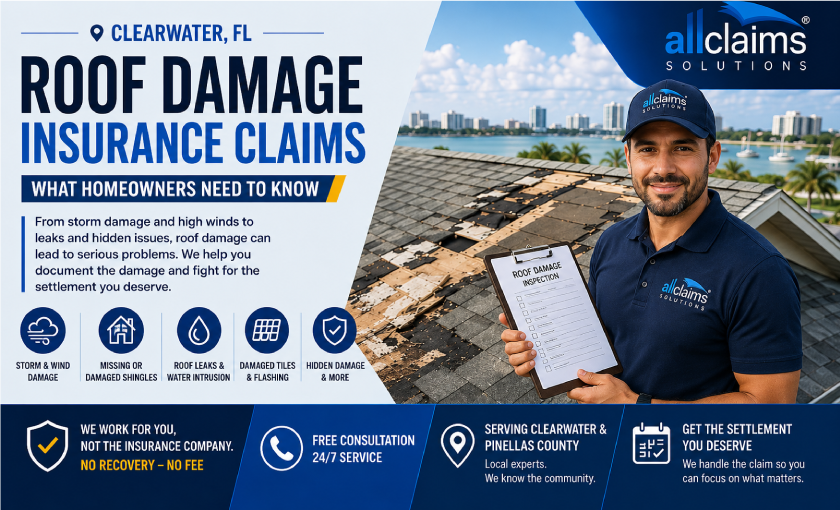
Your roof is one of the most important components protecting your home from Florida’s weather. In Clearwater, strong winds, tropical storms, hurricanes, heavy rainfall, and other severe weather events can cause roof damage that may not always be immediately visible.
A damaged roof can lead to much more than missing shingles or broken tiles. Water intrusion can affect ceilings, walls, insulation, flooring, cabinets, electrical components, and other parts of the property.
For Clearwater homeowners, understanding what caused the roof damage, how the damage is documented, and what your insurance policy may cover can be essential when filing a roof damage insurance claim.
At All Claims Solutions, our Public Adjusters help property owners throughout Clearwater and surrounding Pinellas County communities navigate the insurance claims process after property damage.
We Work for You—not the Insurance Company.
What Can Cause Roof Damage in Clearwater, FL?
Clearwater properties are exposed to a variety of weather conditions throughout the year.
Common causes of roof damage include:
- Hurricane-force winds
- Tropical storms
- Heavy rain
- Wind-driven rain
- Falling trees or branches
- Flying debris
- Hail
- Lightning
- Sudden weather events
- Damage caused by fallen objects
Not every roof problem has the same insurance implications.
The cause, timing, severity, condition of the roof, and specific policy language can all affect how an insurance claim is evaluated.
Common Types of Roof Damage After a Storm
1. Missing or Damaged Shingles
High winds can lift, loosen, crack, or completely remove shingles.
Even when the damage appears minor, exposed areas can allow water to enter the roof system.
2. Damaged Roof Tiles
Tile roofs can be affected by:
- Wind
- Falling branches
- Flying debris
- Impact damage
- Cracking
- Displacement
Some damage may be difficult to identify without a proper inspection.
3. Damaged Roof Flashing
Flashing protects vulnerable areas around:
- Chimneys
- Vents
- Skylights
- Roof intersections
- Walls
- Other roof penetrations
Damaged flashing can create pathways for water intrusion.
4. Roof Leaks
A roof does not necessarily have to collapse for significant damage to occur.
A small opening can allow rainwater to enter and affect:
- Attics
- Ceilings
- Drywall
- Insulation
- Flooring
- Walls
- Cabinets
In some cases, the interior damage can be more extensive than the visible exterior roof damage.
Hidden Roof Damage: Why It Matters
One of the biggest challenges after a storm is that roof damage is not always visible from the ground.
A roof may look relatively intact while still having:
- Lifted shingles
- Damaged underlayment
- Broken tiles
- Damaged flashing
- Openings around roof penetrations
- Moisture intrusion
- Structural damage
Water can also travel from the original entry point into other areas of the home.
For this reason, homeowners should not rely solely on a quick visual inspection from the ground when evaluating potential storm-related roof damage.
Does Homeowners Insurance Cover Roof Damage in Clearwater?
This is one of the most important questions homeowners ask after discovering roof damage.
The answer depends on the specific policy and the circumstances of the loss.
Insurance coverage can vary depending on:
- Cause of damage
- Policy language
- Exclusions
- Deductibles
- Age and condition of the roof
- Maintenance history
- Type of roofing material
- Severity of the damage
- Applicable coverage limitations
A sudden storm-related loss may be treated differently from deterioration that occurred gradually over time.
That’s why homeowners should avoid assuming that a roof claim is automatically covered—or automatically excluded.
The policy and the facts surrounding the loss should be evaluated together.
Storm Damage vs. Wear and Tear
One of the most important issues in a roof insurance claim is determining what actually caused the damage.
For example, Florida weather may expose a roof to years of:
- Sun
- Rain
- Wind
- Humidity
- Temperature changes
- Storm activity
At the same time, a specific storm may cause sudden damage.
Insurance companies may distinguish between damage caused by a covered event and damage resulting from deterioration, maintenance issues, or other exclusions.
This makes proper documentation especially important.
What Should You Do After Discovering Roof Damage?
If you believe your roof has been damaged, consider taking the following steps.
Step 1: Prioritize Safety
Do not climb onto a damaged roof unless you are qualified and it is safe to do so.
Roof damage can create serious fall and structural hazards.
Step 2: Prevent Additional Damage
When reasonably possible and safe, take appropriate temporary measures to protect the property from additional damage.
For example:
- Cover an opening
- Protect interior belongings
- Address active water intrusion
- Arrange emergency repairs when necessary
Keep records and receipts for emergency services and repairs.
Step 3: Document the Damage
Take photographs and videos of:
Exterior Damage
- Missing shingles
- Broken tiles
- Damaged flashing
- Debris
- Fallen branches
- Roof openings
Interior Damage
- Ceiling stains
- Water damage
- Wet drywall
- Flooring damage
- Damaged personal property
Also document the surrounding property when relevant.
Step 4: Report the Loss
Notify your insurance company according to the requirements of your policy.
Keep records of:
- Claim number
- Date of loss
- Date reported
- Insurance adjuster information
- Emails
- Letters
- Estimates
- Inspection reports
What Happens During a Roof Insurance Claim Inspection?
An insurance company may send an adjuster or inspector to evaluate the property.
The inspection may involve reviewing:
- Roof condition
- Visible storm damage
- Interior water damage
- Possible causes of loss
- Existing damage
- Roof age and condition
- Repair or replacement needs
Homeowners should carefully review the resulting estimate and documentation.
The first estimate does not necessarily mean that every aspect of the property loss has been fully documented.
What If the Insurance Company’s Roof Estimate Is Too Low?
This is a common concern for homeowners dealing with property damage.
A roof estimate may not appear to account for:
- All damaged roofing materials
- Underlayment
- Flashing
- Interior water damage
- Insulation
- Drywall
- Additional affected areas
- Required repairs
- Other components related to the documented loss
For example:
Storm
↓
Roof Damage
↓
Water Intrusion
↓
Interior Damage
If only the visible roof damage is considered, the full scope of the loss may not be reflected in the estimate.
This is why a comprehensive evaluation and detailed documentation can be important.
Can a Roof Leak Lead to an Insurance Claim?
Potentially.
However, the important question is what caused the leak.
A roof leak may result from:
- Storm damage
- Wind damage
- Damaged roofing materials
- Failed flashing
- Long-term deterioration
- Maintenance issues
- Other causes
Insurance coverage depends on the applicable policy and circumstances.
If a leak appears after a major storm, homeowners should document both the roof condition and resulting interior damage.
What About Interior Damage From a Roof Leak?
Roof damage can create a chain reaction.
For example:
Wind damages roof
↓
Rain enters the property
↓
Ceiling becomes saturated
↓
Drywall becomes damaged
↓
Water reaches flooring
↓
Additional moisture develops
This is why a roof insurance claim should not necessarily focus exclusively on the roof.
The entire documented loss should be evaluated.
Roof Damage and Mold
Water entering a home through a damaged roof can create moisture problems.
If moisture remains in building materials, mold or other secondary issues may develop.
Potentially affected areas can include:
- Attics
- Insulation
- Drywall
- Ceilings
- Walls
- Flooring
- Cabinets
If mold is discovered, homeowners should document the condition and determine the source of the moisture.
Coverage for mold can vary significantly depending on the policy and circumstances.
Hurricane Roof Damage in Clearwater
Hurricanes and tropical storms can create multiple types of roof damage at the same property.
High winds can:
- Remove roofing materials
- Damage flashing
- Break tiles
- Create openings
- Damage vents
- Cause structural problems
Heavy rain can then enter through those openings.
This can result in a combined claim involving:
Wind Damage + Roof Damage + Water Damage + Interior Damage
That’s one reason hurricane-related roof claims can become more complex than a simple roof repair.
Clearwater Beach and Coastal Roof Damage
Properties in and around Clearwater Beach, Sand Key, Island Estates, and other coastal communities can experience significant exposure to tropical weather and severe storms.
Coastal property owners may need to consider potential damage from:
- High winds
- Heavy rainfall
- Wind-driven rain
- Storm debris
- Tropical storms
- Hurricanes
Pinellas County also identifies storm surge and flooding as significant hurricane-related risks for local property owners.
This makes it especially important to understand the distinction between wind damage, roof damage, water intrusion, and flood damage when evaluating a hurricane-related loss.
Common Roof Insurance Claim Mistakes Clearwater Homeowners Should Avoid
1. Waiting Too Long to Document the Damage
Weather and subsequent repairs can change the condition of a roof.
Document the property as soon as reasonably possible.
2. Assuming a Roof Is Fine Because There Are No Visible Leaks
Some damage may not immediately result in visible interior water intrusion.
3. Only Photographing the Roof
Document both the exterior and interior of the property.
4. Making Permanent Repairs Before Proper Documentation
Emergency measures may be necessary, but whenever reasonably possible, document the damage before permanent repairs alter the condition of the property.
5. Ignoring Secondary Damage
Water entering through a damaged roof can affect areas beyond the roof itself.
6. Accepting an Estimate Without Reviewing the Scope
Make sure the estimate reflects the documented damage and repairs reasonably required for the loss.
7. Assuming All Roof Problems Are Covered
Insurance policies can contain exclusions, limitations, and conditions.
The cause and circumstances of the loss matter.
What If Your Roof Insurance Claim Is Denied?
A denied claim can be frustrating, particularly when you believe the property has suffered legitimate storm damage.
Claims can be disputed for reasons involving:
- Wear and tear
- Age of the roof
- Maintenance
- Cause of loss
- Exclusions
- Policy conditions
- Pre-existing damage
- Insufficient documentation
If your roof insurance claim in Clearwater has been denied, carefully review the insurer’s explanation and the applicable policy provisions.
A licensed Public Adjuster can help evaluate the documented property damage and the claim information to determine whether additional claim assistance may be appropriate.
How a Public Adjuster Can Help With a Roof Insurance Claim
A Public Adjuster represents the policyholder, not the insurance company.
For a complex roof damage claim, a Public Adjuster may assist with:
Property Inspection
Identifying and documenting visible and potentially hidden damage.
Damage Documentation
Organizing photographs, measurements, estimates, and supporting documentation.
Policy Review
Reviewing the applicable policy for relevant coverage, exclusions, deductibles, and limitations.
Claim Preparation
Helping document the scope of the property loss.
Insurance Communication
Assisting with claim-related communication and documentation.
Negotiation
Representing the policyholder during discussions concerning the documented loss.
Why Clearwater Homeowners Choose All Claims Solutions
Roof damage can be stressful enough without having to figure out the insurance claims process alone.
At All Claims Solutions, our Public Adjusters help Clearwater property owners understand and navigate their insurance claims.
Our process focuses on:
INSPECT
↓
DOCUMENT
↓
REVIEW
↓
PREPARE
↓
PRESENT
↓
NEGOTIATE
We work with homeowners and property owners throughout Clearwater and surrounding Pinellas County communities.
We Work for You—not the Insurance Company.
No Recovery – No Fee.
Frequently Asked Questions About Roof Insurance Claims in Clearwater
Coverage depends on the specific policy, cause of damage, exclusions, deductible, and circumstances of the loss.
A policy may provide coverage for certain hurricane-related roof damage, but the specific terms and hurricane deductible must be reviewed.
It depends on what caused the leak. A sudden covered event may be treated differently from long-term deterioration, wear and tear, or maintenance-related problems.
Some storm damage is obvious, while other damage may require a professional inspection. Missing or damaged roofing materials, broken tiles, damaged flashing, and signs of water intrusion can be warning signs.
Protect the property from additional damage when reasonably possible, document the damage, keep records of emergency repairs, and notify your insurance company according to your policy requirements.
Yes. A licensed Public Adjuster can assist the policyholder with inspection, documentation, claim preparation, communication, and negotiation.
Review the insurer’s explanation and the applicable policy provisions. The cause and evidence surrounding the damage are important when evaluating the claim.
Get Help With a Roof Damage Insurance Claim in Clearwater, FL
Roof damage can quickly become more than a roofing problem.
A storm can create:
Roof Damage → Water Intrusion → Interior Damage → Additional Repairs
Understanding the cause of the damage and properly documenting the complete loss can be critical when navigating an insurance claim.
If your Clearwater property has suffered roof damage from a hurricane, storm, wind event, or other covered loss, All Claims Solutions can help you navigate the claims process.
Don’t navigate a complicated property insurance claim alone.
All Claims Solutions – Clearwater Public Adjusters
We Work for You—not the Insurance Company.
No Recovery – No Fee.
24/7 Service
This article is provided for general informational purposes and does not constitute legal advice or a determination of insurance coverage. Coverage depends on the specific insurance policy and circumstances of each loss.






[…] Damage Insurance Claims in Clearwater, FL: What Property Owners Need to Know Roof Damage Insurance Claims in Clearwater, FL: What Homeowners Need to Know Water Damage Insurance Claims in Clearwater, FL: What Property Owners Need to Know […]
[…] Damage Insurance Claims in Clearwater, FL: What Property Owners Need to Know Roof Damage Insurance Claims in Clearwater, FL: What Homeowners Need to Know Water Damage Insurance Claims in Clearwater, FL: What Property Owners Need to […]
[…] Damage Insurance Claims in Clearwater, FL: What Property Owners Need to Know Roof Damage Insurance Claims in Clearwater, FL: What Homeowners Need to Know Water Damage Insurance Claims in Clearwater, FL: What Property Owners Need to […]
[…] Damage Insurance Claims in Clearwater, FL: What Property Owners Need to Know Roof Damage Insurance Claims in Clearwater, FL: What Homeowners Need to Know Water Damage Insurance Claims in Clearwater, FL: What Property Owners Need to […]