
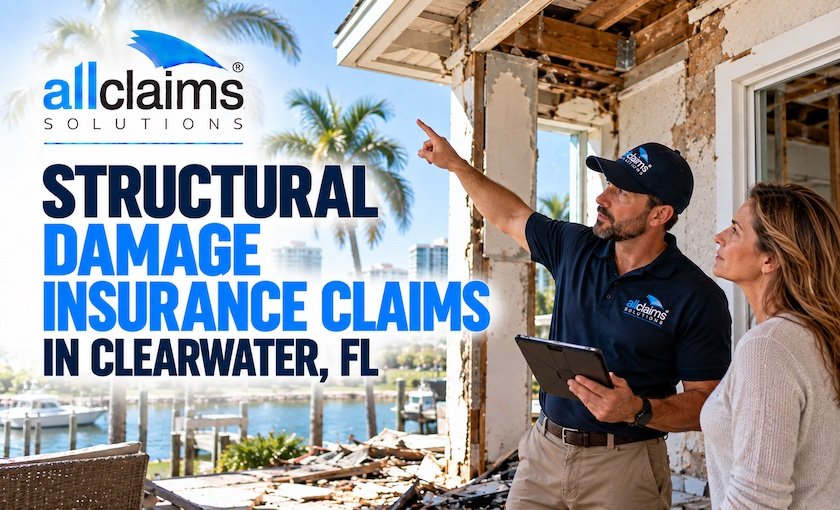
Structural damage can be one of the most serious types of property damage a homeowner or business owner can face.
Unlike cosmetic damage, structural problems can affect the safety, stability, and usability of a building. Cracked walls, damaged roof framing, foundation problems, compromised support structures, and other structural issues may require extensive inspections and repairs.
For property owners in Clearwater, FL, structural damage can result from hurricanes, severe storms, wind, falling trees, fire, water intrusion, impact, or other events. Whether insurance provides coverage depends on the specific policy, the cause of loss, exclusions, deductibles, limits, and the circumstances surrounding the damage.
Understanding how structural damage insurance claims work can help property owners document the loss and navigate the claims process more effectively.
At All Claims Solutions, our Public Adjusters help Clearwater property owners document property damage, prepare insurance claims, and navigate the insurance claims process.
We work for you—not the insurance company.
What Is Structural Damage?
Structural damage generally refers to damage affecting components that contribute to the strength, stability, or integrity of a building.
Depending on the property and the cause of loss, structural components may include:
- Foundations
- Load-bearing walls
- Roof framing
- Structural beams
- Columns
- Floor joists
- Roof trusses
- Structural connections
- Exterior walls
- Supporting framing
- Certain structural portions of attached structures
Not every crack, leak, or cosmetic defect is considered structural damage.
For example, a small drywall crack may be cosmetic, while a crack associated with movement of the foundation or structural framing may require further professional evaluation.
Important:
A property owner should not assume that a visible crack or defect automatically means the building has structural damage—or that structural damage is automatically covered by insurance.
The cause and extent of the damage should be properly evaluated.
What Causes Structural Damage in Clearwater Properties?
Clearwater properties can experience structural damage from several different causes.
1. Hurricane and Storm Damage
Severe weather can place significant stress on a building.
High winds may damage:
- Roof framing
- Trusses
- Exterior walls
- Windows and doors
- Structural connections
- Attached structures
A storm can also create openings that allow water to enter the building.
The resulting water intrusion may affect additional components over time.
For Clearwater property owners, structural damage can therefore be part of a larger storm or hurricane insurance claim.
2. Roof Damage
A damaged roof does not always mean only damaged roofing materials.
Severe weather or falling objects can potentially affect:
- Roof decking
- Rafters
- Trusses
- Structural framing
- Attic components
- Exterior walls
- Ceiling structures
Roof damage can also allow water to enter the property, potentially creating additional damage to walls, ceilings, insulation, flooring, and other components.
This is why a structural evaluation may be important when significant roof damage has occurred.
3. Water Intrusion
Water can affect more than visible finishes.
Depending on the source and duration of the water intrusion, moisture may affect:
- Wall assemblies
- Framing
- Subflooring
- Structural wood
- Insulation
- Ceilings
- Flooring
- Cabinets
- Other building components
However, water damage and structural damage are not automatically covered simply because they occurred together.
The source of the water, cause of loss, policy language, exclusions, and circumstances are important when evaluating coverage.
4. Fire and Smoke Damage
A fire can cause extensive structural damage.
Depending on the severity of the fire, damage may involve:
- Walls
- Roof framing
- Floors
- Ceilings
- Structural beams
- Doors and windows
- Electrical systems
- Plumbing
- HVAC systems
Firefighting efforts can also introduce significant amounts of water into the property.
As a result, a fire insurance claim may involve several categories of damage at the same time.
Read our guide to Fire Damage Insurance Claims in Clearwater
5. Falling Trees and Debris
Severe weather can cause trees or large branches to fall onto a property.
A falling tree can damage:
- Roof structures
- Exterior walls
- Garages
- Windows
- Doors
- Structural framing
- Fences and other structures
The insurance treatment of tree-related damage depends on the circumstances and the policy.
6. Foundation and Ground Movement
Foundation-related problems can be particularly complicated.
Potential signs can include:
- Large or recurring cracks
- Doors that suddenly stop closing properly
- Uneven floors
- Windows that become difficult to open
- Separation around doors or windows
- Cracks extending through multiple areas
- Visible foundation movement
However, these signs do not automatically establish the cause of the problem.
A qualified structural engineer or other appropriate professional may be needed to determine the nature and cause of the damage.
Sinkhole-related damage requires particular attention in Florida.
Florida’s Department of Financial Services explains that sinkhole coverage has specific requirements, including statutory definitions relating to structural damage. A crack by itself does not necessarily meet the legal definition of structural damage for sinkhole coverage.
Does Homeowners Insurance Cover Structural Damage in Clearwater?
It depends on the policy and the cause of the damage.
Florida homeowners insurance generally protects against damage caused by covered perils, but policies differ significantly in their covered causes, exclusions, deductibles, limits, endorsements, and conditions.
Structural damage may potentially be part of a covered claim when it results from a covered event.
For example, depending on the policy and circumstances, a claim could involve structural damage resulting from:
- Hurricane or wind damage
- Certain storm events
- Fire
- Falling objects
- Certain accidental events
- Other covered perils
On the other hand, damage associated with excluded causes, wear and tear, maintenance issues, deterioration, or other exclusions may be treated differently.
The important question is not simply:
“Is there structural damage?”
The more important questions are:
What caused the structural damage?
Does the policy provide coverage for that cause of loss?
What exclusions, deductibles, limits, and conditions apply?
Signs Your Property May Have Structural Damage
Property owners should pay attention to changes that may indicate a more significant problem.
Potential warning signs include:
Interior
- Large wall cracks
- Cracks extending from corners
- Cracks around doors and windows
- Uneven floors
- Ceiling separation
- Doors or windows that suddenly stick
- Visible movement or separation
Exterior
- Cracks in exterior walls
- Separation around windows or doors
- Bowing walls
- Visible foundation cracks
- Roof-line irregularities
- Structural components that appear displaced
After a Storm
Following a major storm, also look for:
- Damaged roof framing
- Sagging roof areas
- Damaged trusses
- Exterior wall movement
- Broken structural supports
- Large openings created by wind or debris
- Water intrusion associated with structural damage
Do not enter or inspect an area that may be structurally unsafe.
Safety should come before documentation.
What Should You Do After Discovering Structural Damage?
If you believe your Clearwater property has structural damage, take organized steps.
Step 1: Prioritize Safety
Do not enter areas that appear unstable.
If there are concerns about the structural integrity of the building, follow the guidance of emergency personnel and qualified professionals.
Step 2: Document the Condition
When it is safe to do so, photograph and video the property.
Document:
- Exterior walls
- Foundation
- Roof
- Ceilings
- Floors
- Cracks
- Doors and windows
- Damaged structural components
- Water intrusion
- Personal property
- Surrounding property
Take both wide-angle photographs and detailed close-ups.
Step 3: Prevent Additional Damage
Florida’s Department of Financial Services recommends taking reasonable steps to prevent additional damage when possible and safe, documenting repairs, and keeping receipts.
Examples may include:
- Covering openings
- Protecting exposed areas
- Removing standing water when safe
- Protecting undamaged belongings
- Arranging emergency mitigation
Emergency repairs are different from permanent repairs.
Whenever reasonably possible, document the original condition before significant permanent repairs or demolition.
Step 4: Notify Your Insurance Company
Review your policy and notify your insurance company according to its requirements.
Keep copies of:
- Claim number
- Date of loss
- Date reported
- Insurance correspondence
- Inspection reports
- Estimates
- Photographs
- Videos
- Repair invoices
- Engineer reports
- Contractor estimates
Keeping an organized claim file can make it easier to track the loss.
Step 5: Have the Damage Properly Evaluated
Structural damage can require expertise beyond a basic visual inspection.
Depending on the circumstances, property owners may need input from:
- Structural engineers
- Contractors
- Roofing professionals
- Restoration companies
- Building professionals
- Public Adjusters
Each professional has a different role.
A structural engineer, for example, can evaluate structural conditions. A contractor can provide repair-related information. A public adjuster can assist with the insurance claim and documentation process.
Why Structural Damage Claims Can Become Complicated
Structural claims can involve multiple layers of damage.
For example:
HURRICANE
↓
ROOF DAMAGE
↓
WATER INTRUSION
↓
WALL / CEILING DAMAGE
↓
STRUCTURAL DAMAGE
↓
ADDITIONAL REPAIR REQUIREMENTS
The insurance claim therefore may involve much more than the first visible problem.
A complete evaluation may need to consider the documented scope of the loss, applicable policy provisions, and the relationship between the damage and the covered event.
What If the Insurance Estimate Does Not Include All the Structural Damage?
Sometimes additional damage becomes apparent after an initial inspection.
For example, an initial inspection may identify:
- Damaged drywall
- Ceiling staining
- Roof damage
But further investigation may identify:
- Damaged framing
- Additional moisture intrusion
- Insulation damage
- Structural components requiring repair
- Additional labor or material requirements
If additional covered damage or costs are discovered, the property owner should determine whether the circumstances may support additional documentation or a supplemental claim.
Florida law currently generally requires an initial or reopened property insurance claim to be reported within one year after the date of loss, while a supplemental claim generally must be reported within 18 months, subject to the statute, policy requirements, and applicable circumstances.
Don’t wait until the deadline.
If additional damage is discovered, document it and address it as soon as reasonably possible.
Structural Damage After a Hurricane in Clearwater
Hurricanes deserve special attention because a single storm can create multiple categories of damage.
A Clearwater property may experience:
- Wind damage
- Roof damage
- Structural damage
- Water intrusion
- Broken windows
- Interior damage
- Mold-related issues
- Personal property damage
Florida law has specific rules for reporting property insurance claims resulting from hurricanes and other weather-related events. Under current §627.70132, the applicable date of loss for certain weather-related claims is tied to the hurricane’s landfall or verification of the relevant weather event.
Learn more about Hurricane Damage Insurance Claims in Clearwater
Structural Damage vs. Cosmetic Damage
Understanding the difference can help property owners recognize when a more detailed evaluation may be appropriate.
| Cosmetic Damage | Potential Structural Damage |
|---|---|
| Minor paint cracks | Significant wall cracking |
| Surface staining | Structural movement |
| Small drywall imperfections | Foundation movement |
| Minor finish damage | Damaged load-bearing components |
| Isolated cosmetic defects | Damaged framing or supports |
| Surface-level deterioration | Structural instability |
This table is only a general guide.
A visible defect does not establish the cause or structural significance of the damage. A qualified professional may need to evaluate the property.
Can a Public Adjuster Help With a Structural Damage Claim?
A public adjuster represents the policyholder, rather than the insurance company.
According to the Florida Department of Financial Services, public adjusters can assist policyholders with preparing and presenting insurance claims and may act on the policyholder’s behalf during the claims process. Public adjusters must be licensed by the state.
A public adjuster may assist with:
- Documenting the property damage
- Organizing claim information
- Preparing claim documentation
- Reviewing applicable policy provisions
- Identifying components of the documented loss
- Communicating with the insurance company
- Reviewing estimates
- Presenting the claim
- Negotiating on behalf of the policyholder
Important:
Hiring a public adjuster does not guarantee a higher insurance payment or faster claim handling. Florida DFS specifically advises consumers to verify licensing, understand the contract and fees, and consider the circumstances before hiring one.
When Should You Consider Professional Claim Assistance?
Professional assistance may be worth considering when a structural damage claim is:
- Large or complex
- Difficult to document
- Involves multiple types of damage
- Disputed with the insurer
- Underpaid
- Denied
- Involves hidden damage
- Involves extensive repairs
- Involves commercial property
- Requires significant documentation
It can also be useful when a property owner simply does not have the time or experience to manage a complicated insurance claim.
Structural Damage Insurance Claim Checklist
Before moving forward with a structural damage claim, consider organizing:
Property Documentation
- Photos
- Videos
- Inspection reports
- Engineer reports
- Contractor estimates
- Repair invoices
Insurance Documentation
- Insurance policy
- Declarations page
- Claim number
- Insurance correspondence
- Adjuster information
- Estimates
- Payment information
Damage Documentation
- Structural components
- Interior damage
- Exterior damage
- Roof damage
- Water intrusion
- Personal property
- Emergency repairs
Financial Documentation
- Receipts
- Temporary repair expenses
- Mitigation invoices
- Additional repair estimates
How All Claims Solutions Can Help With Structural Damage Claims in Clearwater
Structural damage can be difficult to evaluate and even more difficult to document as part of a property insurance claim.
At All Claims Solutions, our Clearwater Public Adjusters help property owners navigate the insurance claims process by documenting property damage, preparing claim information, and communicating with insurance companies on behalf of policyholders.
We work with residential and commercial property owners dealing with:
- Structural damage
- Storm damage
- Hurricane damage
- Roof damage
- Water damage
- Fire damage
- Smoke and soot damage
- Commercial property damage
- Other property insurance losses
We work for you—not the insurance company.
If your Clearwater property has suffered structural damage, contact All Claims Solutions for a free consultation and claim evaluation.
All Claims Solutions — Clearwater Public Adjusters
We Work for You—not the Insurance Company.
No Recovery – No Fee.
24/7: 727-336-0627
Email: info@all-claims.com
Address: 600 Cleveland St., Suite 382, Clearwater, FL 33755
Frequently Asked Questions
It may, depending on the cause of the damage and the specific insurance policy. Covered perils, exclusions, deductibles, limits, endorsements, and policy conditions all matter.
Structural damage can result from severe storms, hurricanes, wind, falling trees, fire, certain water-related events, impact, foundation problems, and other causes. The cause should be professionally evaluated.
Coverage depends on the cause of the foundation damage and the policy. Certain causes may be excluded or subject to specific coverage provisions.
There is no single answer for every property. Coverage depends on the policy, the cause of the structural damage, applicable hurricane or wind deductibles, exclusions, and other policy terms.
Document the additional damage, preserve relevant records, notify the insurer according to the policy requirements, and determine whether the circumstances may support additional or supplemental claim documentation.
Under current Florida law, an initial property insurance claim or reopened claim generally must be reported within one year after the date of loss, while a supplemental claim generally must be reported within 18 months. Specific policy requirements and circumstances also matter.
A licensed public adjuster can assist a policyholder with documenting, preparing, presenting, and negotiating a property insurance claim. However, hiring a public adjuster does not guarantee a particular claim outcome.
Get Help With Your Clearwater Insurance Claim
Choosing a public adjuster is an important decision, particularly when a property loss is extensive or complicated.
At All Claims Solutions, our licensed Public Adjusters work for the policyholder—not the insurance company.
We help Clearwater property owners with residential and commercial insurance claims involving water, fire, storm, hurricane, roof, mold, structural, and other covered property losses.
If you are considering professional claim assistance, you can start with a Free Insurance Claim Evaluation.
All Claims Solutions – Clearwater
📍 600 Cleveland St., Suite 382, Clearwater, FL 33755
📞 24/7: 727-336-0627
🌐 clearwater.allclaimssolutions.com
✉️ info@all-claims.com
No Recovery – No Fee.
This article is for general informational purposes only and does not constitute legal advice or a determination of insurance coverage. Insurance coverage depends on the specific policy, endorsements, exclusions, deductibles, limits, and circumstances of the loss. Florida insurance laws and requirements may change.