
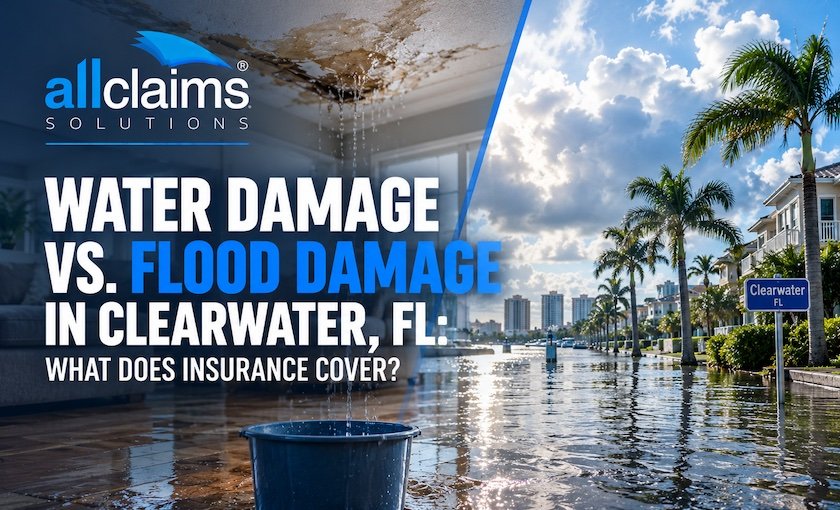
Water damage and flood damage may look similar, but insurance companies generally treat them very differently.
For property owners in Clearwater, this distinction can become especially important after heavy rain, hurricanes, storm surge, plumbing failures, roof damage, or water intrusion.
A burst pipe inside your home, for example, may create a water damage claim under your homeowners insurance. But if water enters your property because of rising stormwater or flooding, your standard homeowners policy will typically not provide coverage for the flood damage.
The difference often comes down to where the water came from, how it entered the property, what caused the loss, and what your specific policy covers.
The Florida Department of Financial Services explains that standard homeowners insurance generally does not cover flood damage, while certain types of accidental water damage may be covered depending on the policy.
If you own a home, condominium, rental property, or commercial property in Clearwater, understanding this distinction before filing an insurance claim can make a significant difference.
What Is Water Damage?
Water damage generally refers to damage caused by water entering or escaping from a property under circumstances that may be covered by an insurance policy.
Examples can include:
- A sudden pipe burst
- A broken water supply line
- A leaking water heater
- An appliance suddenly releasing water
- A plumbing failure
- Water entering through a storm-damaged roof
- Certain accidental water discharges
- Certain HVAC-related leaks
- Some forms of sewer or drain backup, when the appropriate coverage applies
Florida’s Department of Financial Services specifically identifies accidental discharge or overflow of water from a pipe, plumbing system, or household appliance as examples of water-related losses that may be covered, depending on the policy.
However, not every water-related loss is automatically covered.
Your policy may contain exclusions, deductibles, limitations, or endorsements that affect the claim.
What Is Flood Damage?
Flood damage is different from ordinary water damage.
Under flood insurance definitions, flooding generally involves a general and temporary inundation of normally dry land, such as water from:
- Overflowing rivers or waterways
- Tidal water
- Storm surge
- Significant surface-water runoff
- Heavy rainfall that causes widespread surface flooding
- Other qualifying sources of flooding
The Florida Department of Financial Services notes that flood insurance is separate from standard homeowners insurance and defines flood in terms that include overflow of inland or tidal waters and unusual or rapid accumulation or runoff of surface water.
For Clearwater property owners, this distinction is particularly important because flooding can occur even when a property is not directly on the waterfront.
Pinellas County specifically warns that flooding can occur anywhere in the county, not just near rivers, lakes, or the Gulf, and that most homeowners insurance policies do not cover losses caused by flooding.
Water Damage vs. Flood Damage: What’s the Difference?
| Water Damage | Flood Damage |
|---|---|
| Often originates inside the property | Generally involves water inundating normally dry land |
| May result from plumbing or appliance failures | May result from storm surge, tidal water, or surface-water flooding |
| May be covered by homeowners insurance | Usually requires separate flood insurance |
| Coverage depends on the policy and cause | Coverage depends on a flood insurance policy |
| May affect one property | Flooding often affects multiple properties or areas |
| Sewer backup may require an endorsement | Flood insurance has its own coverage rules |
The important point is that the presence of water alone does not determine coverage.
The source and cause of the water are critical.
Does Homeowners Insurance Cover Water Damage in Clearwater?
It can, depending on the cause of the damage and the terms of your policy.
For example, a sudden and accidental pipe failure may potentially trigger coverage for resulting property damage.
However, insurance companies may distinguish between:
- Sudden damage and long-term leaks
- Accidental discharge and maintenance problems
- Covered water intrusion and excluded flooding
- Resulting damage and the cost to repair the failed component
- Water damage and sewer backup
- Storm-related water intrusion and floodwater
This is why simply saying “I have water damage” isn’t enough to determine whether an insurance claim is covered.
The policy language and facts surrounding the loss matter.
Does Homeowners Insurance Cover Flood Damage in Clearwater?
Generally, no.
The Florida Department of Financial Services states that flood damage is not covered by a standard homeowners insurance policy and that separate flood insurance may be necessary.
Flood insurance may be available through the National Flood Insurance Program or private insurance markets.
This is particularly important in Clearwater and throughout Pinellas County.
Pinellas County recommends considering flood insurance for homes, businesses, and rental properties because flooding can occur throughout the county.
What About Hurricane and Storm Damage?
This is where the difference between water damage and flood damage becomes especially important.
Imagine a hurricane causes a tree to fall onto your roof.
The roof is damaged, and rain enters the home.
That scenario can be very different from storm surge rising around the property and entering through doors, windows, or other openings.
Scenario 1: Storm damages the roof
A covered wind event damages your roof, allowing rainwater to enter.
Depending on your policy and the facts of the loss, the resulting interior damage may potentially be part of a covered claim.
Scenario 2: Storm surge enters the home
Water from storm surge or qualifying flooding enters the property.
That damage would generally fall under flood insurance rather than standard homeowners coverage.
Scenario 3: Heavy rain causes widespread surface flooding
If rainfall causes surface water to accumulate and enter the property as qualifying floodwater, the claim may be treated as flood damage.
This distinction can become critical after a hurricane or major storm in Clearwater.
What About Sewer Backup?
Sewer backup is another situation that can create confusion.
Many homeowners assume that any water entering the house should automatically be covered.
That isn’t necessarily true.
Florida’s Department of Financial Services notes that homeowners policies do not typically cover water backup from a sewer, sump, or drain unless appropriate coverage has been added.
Some policies offer a Water Backup and Sump Discharge or Overflow endorsement.
However, this type of endorsement does not provide coverage for damage caused by flooding.
Therefore, a property owner should determine whether the water came from:
- A plumbing system
- A sewer
- A drain
- A sump
- Surface water
- Storm surge
- Another source
before assuming which insurance policy applies.
What If a Hurricane Causes Both Water and Flood Damage?
This can be one of the most complicated situations.
For example, a Clearwater property could experience:
- Wind damages the roof.
- Rain enters through the damaged roof.
- Storm surge later enters the property.
- Interior walls, flooring, cabinets, and personal property are damaged.
There may be multiple causes of damage, potentially involving different coverage provisions or even different insurance policies.
The claim should therefore be documented carefully.
Photographs, videos, repair estimates, weather information, inspection reports, and evidence showing the source and progression of the water can all become important when determining what happened.
Why the Cause of Water Damage Matters
One of the most important questions in a water damage insurance claim is:
Where did the water come from?
Two properties could have almost identical-looking damage but completely different coverage outcomes.
For example:
Property A:
A water supply pipe suddenly bursts inside the home.
Property B:
Floodwater rises from outside and enters the home.
Both properties may have:
- Wet drywall
- Damaged flooring
- Damaged cabinets
- Mold concerns
- Damaged furniture
But the insurance coverage may be completely different.
That is why documenting the source and cause of the water is so important.
What Should You Do After Water or Flood Damage in Clearwater?
If your property experiences water intrusion, take action quickly.
1. Make sure everyone is safe
If there is standing water near electrical systems, do not put yourself at risk.
2. Stop the source if reasonably possible
If a pipe is leaking, shut off the water when it is safe to do so.
3. Document everything
Take photographs and videos before removing damaged materials whenever possible.
Document:
- Floors
- Walls
- Ceilings
- Cabinets
- Appliances
- Furniture
- Personal belongings
- Exterior areas
- Roof damage
- The apparent source of the water
4. Prevent additional damage
Florida consumer guidance recommends taking reasonable steps to protect property from further damage. Keep receipts for reasonable emergency expenses and temporary repairs.
5. Do not automatically throw everything away
Some damaged materials and personal property may be important evidence for the insurance claim.
6. Notify your insurance company
Review your policy’s reporting requirements and report the loss promptly.
Florida law currently provides a general one-year notice period for an initial or reopened property insurance claim and 18 months for a supplemental claim, subject to the statute, policy terms, and applicable circumstances.
Do not treat these statutory periods as a reason to wait. Your policy may impose additional requirements, and early reporting can help preserve evidence.
What If Your Water Damage Insurance Claim Is Denied?
A denied claim does not necessarily mean there is nothing more you can do.
Insurance companies may deny or limit water damage claims because they believe:
- The damage was caused by flooding
- The loss resulted from long-term leakage
- The property owner failed to maintain the property
- The damage falls under an exclusion
- A required endorsement was not included
- The damage is below the deductible
- The claimed damage was not adequately documented
- Another cause of loss applies
The first step is to understand why the claim was denied.
Review the denial letter and the specific policy provisions cited by the insurer.
If you believe the decision does not accurately reflect the facts or coverage, you may want professional assistance reviewing the claim.
What If the Insurance Company Underpaid the Claim?
Water damage claims can involve much more than the visible cost of drying out a room.
Depending on the circumstances, the scope may include:
- Drywall
- Flooring
- Cabinets
- Baseboards
- Insulation
- Electrical components
- Plumbing-related damage
- HVAC components
- Personal property
- Structural repairs
- Mold-related costs where coverage applies
- Additional living expenses for eligible residential claims
Florida’s consumer guidance notes that coverage and settlement methods vary by policy, including differences between replacement cost and actual cash value.
If the insurer’s estimate does not appear to account for the full scope of covered damage, the claim may require additional documentation or a supplemental claim.
Can a Public Adjuster Help With a Water Damage Claim in Clearwater?
A public adjuster represents the policyholder, rather than the insurance company.
According to the Florida Department of Financial Services, a public adjuster can assist with preparing and presenting an insurance claim, documentation, and the claim process. Public adjusters must be licensed by DFS.
A public adjuster may be helpful when:
- The damage is extensive
- The cause of loss is disputed
- The claim has been denied
- The claim appears underpaid
- There are multiple areas of damage
- The scope of repairs is complicated
- You are dealing with a hurricane-related loss
- You need help documenting and presenting the claim
A public adjuster does not guarantee a particular settlement amount. Their role is to represent the policyholder and help prepare, document, and negotiate the claim based on the policy and the evidence.
Water Damage vs. Flood Damage: Clearwater Examples
Here are some common scenarios property owners may encounter.
Burst pipe
Potentially water damage coverage
A pipe suddenly bursts inside the property and damages flooring and drywall.
Washing machine hose failure
Potentially water damage coverage
A supply hose unexpectedly breaks and releases water into the home.
Roof damaged by a storm
Potentially covered storm/water claim
A covered storm damages the roof and rain subsequently enters the property.
Storm surge
Generally flood damage
Rising coastal water enters the property during a hurricane or tropical storm.
Heavy surface-water flooding
Generally flood damage
Widespread surface water accumulates and enters the home.
Sewer backup
Coverage depends on the policy
A sewer or drain backs up into the property. Specific water-backup coverage may be required.
Why Clearwater Property Owners Should Pay Attention to Flood Coverage
Living in Clearwater means that understanding flood risk is important even if your property has never flooded before.
Pinellas County states that flooding can happen anywhere and encourages property owners to consider flood insurance for homes, businesses, and rentals.
Another important consideration is that flood insurance is not something you can generally purchase after a flood begins and expect it to cover that event.
Pinellas County notes that flood insurance has a waiting period before coverage starts.
That makes understanding your coverage before a storm happens especially important.
Water Damage vs. Flood Damage: What Does Insurance Cover?
The simplest way to remember the difference is:
Water damage may be covered by homeowners insurance when it results from a covered cause, such as certain sudden and accidental water discharges.
Flood damage is generally excluded from standard homeowners insurance and requires separate flood coverage.
But real claims are not always that simple.
A hurricane can create multiple causes of damage. A roof failure can allow rain into a home. A sewer backup can look similar to flooding. Surface water can be difficult to distinguish from other sources.
Ultimately, your policy, the cause of loss, the evidence, and the specific circumstances of the damage determine how the claim should be evaluated.
Frequently Asked Questions
It may. Coverage depends on the cause of the water, the policy language, exclusions, deductibles, and applicable endorsements. Sudden and accidental water discharges may be covered in some circumstances.
Generally, no. Standard homeowners insurance typically excludes flood damage. Separate flood insurance may be necessary.
Generally, yes. Storm surge involves coastal or tidal water and is typically treated as flood damage rather than ordinary homeowners water damage.
It may be, depending on what caused the roof damage and the terms of the policy. For example, if a covered storm damages the roof and rain subsequently enters through the opening, the resulting damage may be evaluated differently from floodwater entering the property.
Not necessarily. Sewer backup and flooding are distinct causes, and coverage for sewer or drain backup may require a specific endorsement.
Depending on the circumstances, there may be options to challenge the determination, provide additional documentation, or pursue a supplemental or reopened claim. The reason for the denial and the applicable policy and deadlines should be reviewed carefully.
Florida law currently generally provides one year to report an initial or reopened property insurance claim and 18 months for a supplemental claim, subject to applicable law, policy requirements, and exceptions.
It depends on the complexity of the claim. A public adjuster may be particularly useful when damage is extensive, the claim is denied or underpaid, the cause of loss is disputed, or significant documentation is required.
Need Help With a Water Damage Insurance Claim in Clearwater?
If your Clearwater property has experienced water damage, flooding, storm damage, or a combination of losses, understanding the cause and documenting the damage are critical first steps.
At All Claims Solutions, our public adjusters represent property owners during the insurance claims process and can help evaluate the damage, documentation, and coverage issues surrounding a claim.
Don’t assume a denial or insurance estimate is the final word.
This article is for general informational purposes only and does not constitute legal advice or a determination of insurance coverage. Insurance coverage depends on the specific policy, endorsements, exclusions, deductibles, limits, and circumstances of the loss. Florida insurance laws and requirements may change.