
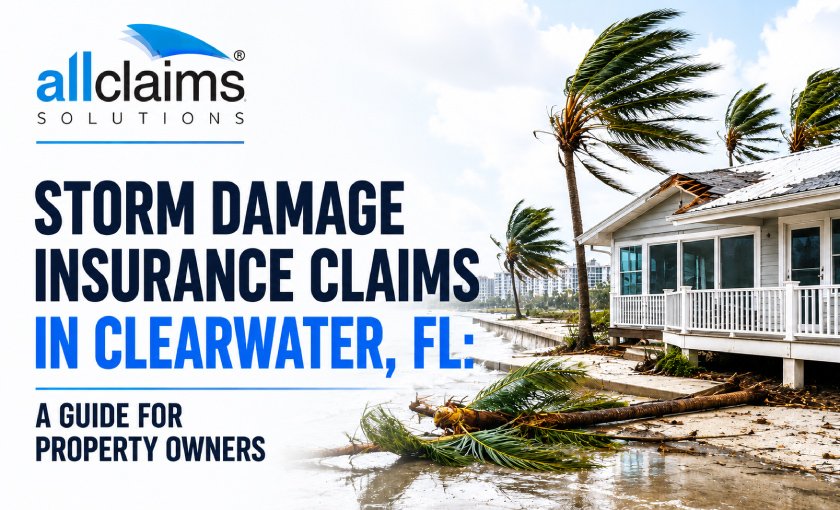
Storms can cause significant damage to homes and commercial properties throughout Clearwater and Pinellas County.
High winds can damage roofs and siding. Heavy rain can lead to water intrusion. Falling trees can damage structures, vehicles, and personal property. Storm debris can create additional hazards, while hidden damage may not become visible until days or weeks later.
After a storm, property owners often have important questions:
- Does my insurance cover the storm damage?
- What should I do immediately after the storm?
- How do I document the damage?
- Is roof damage covered?
- What about water damage caused by a damaged roof?
- Does my hurricane deductible apply?
- What happens if my insurance claim is underpaid or denied?
- Should I hire a Public Adjuster?
Understanding the insurance claims process can help Clearwater property owners make informed decisions after a storm.
At All Claims Solutions, our Public Adjusters help property owners document storm damage, prepare insurance claims, and navigate the property insurance claims process.
We Work for You—not the Insurance Company.
What Is a Storm Damage Insurance Claim?
A storm damage insurance claim is a request for insurance benefits after a property suffers damage from a covered weather-related event.
Depending on the circumstances and policy, storm damage may involve:
- Wind damage
- Roof damage
- Heavy rain
- Water intrusion
- Fallen trees
- Structural damage
- Damaged windows and doors
- Exterior damage
- Interior damage
- Personal property damage
- Debris and cleanup
Florida’s Department of Financial Services explains that homeowners insurance can provide protection against covered disasters, including hurricanes and other weather-related events, but the exact coverage depends on the individual policy.
That distinction is important.
Not every type of storm-related damage is automatically covered.
The cause of loss, policy language, exclusions, deductibles, limits, endorsements, and circumstances surrounding the damage all matter.
What Types of Storm Damage Can Insurance Cover?
Coverage varies by policy, but a storm insurance claim may potentially involve several categories of property damage.
1. Roof Damage
Wind and severe weather can damage:
- Shingles
- Tiles
- Metal roofing
- Flashing
- Vents
- Roof decking
- Underlayment
Roof damage can also allow rainwater to enter the property.
This can create a much larger claim involving both roof damage and interior water damage.
2. Wind Damage
Strong winds can damage:
- Roofs
- Siding
- Fences
- Windows
- Doors
- Exterior structures
- Landscaping
- Other parts of the property
Wind damage should be documented as soon as it is safe to inspect the property.
3. Water Intrusion
A storm can create openings in the roof or exterior walls that allow rainwater to enter.
Water may damage:
- Ceilings
- Walls
- Flooring
- Cabinets
- Insulation
- Furniture
- Electronics
- Personal belongings
The source and circumstances of the water intrusion are important when determining coverage.
4. Fallen Trees
Trees or large branches can damage:
- Roofs
- Vehicles
- Fences
- Garages
- Pool enclosures
- Outdoor structures
- Windows
Tree-related coverage can vary depending on the circumstances and policy.
5. Structural Damage
Severe storms can affect structural components of a property.
Potential damage may involve:
- Roof framing
- Walls
- Ceilings
- Exterior structures
- Foundations
- Attached structures
Significant structural damage should be professionally evaluated before repairs begin.
Storm Damage vs. Hurricane Damage in Clearwater
These terms are related, but they should not always be treated as identical.
A storm damage claim may involve wind, severe rain, or another weather-related event.
A hurricane claim involves damage associated with a hurricane and may trigger specific policy provisions, including a hurricane deductible.
Florida DFS provides specific consumer information regarding Florida’s hurricane deductible and how it may apply to covered hurricane losses.
This makes it important for Clearwater property owners to understand what caused the damage and which policy provisions apply.
Related Resource
Hurricane Damage Insurance Claims in Clearwater, FL: What Property Owners Need to Know
This should be one of the most important internal links from this article.
Does Homeowners Insurance Cover Storm Damage in Clearwater?
It may.
Many homeowners policies provide coverage for certain types of storm-related damage, but coverage depends on the individual policy.
The policy may address:
- Covered perils
- Exclusions
- Deductibles
- Coverage limits
- Additional endorsements
- Conditions
- Requirements for reporting the claim
Florida’s Department of Financial Services recommends that homeowners understand their policy, including coverage and deductibles, before a loss occurs.
For that reason, property owners should avoid assuming that every form of storm damage is covered simply because a storm caused it.
What Should You Do Immediately After Storm Damage?
The first priority is always safety.
Once it is safe to inspect the property, documentation becomes extremely important.
1. Check for Immediate Hazards
Look for:
- Downed power lines
- Structural instability
- Standing water near electrical systems
- Broken glass
- Gas leaks
- Fallen trees
- Other hazards
Do not enter an unsafe structure.
2. Document the Damage
Take photographs and videos of:
- The exterior
- Roof
- Windows
- Doors
- Walls
- Ceilings
- Floors
- Water intrusion
- Personal property
- Fallen trees
- Structural damage
Florida DFS recommends documenting property damage with photographs or video and keeping documentation of repairs.
Tip:
Take both wide-angle photos and close-up photographs.
Wide images show the overall condition of the property.
Close-ups show specific damage.
3. Prevent Additional Damage
Property owners should take reasonable emergency measures to prevent further damage when it is safe to do so.
Examples can include:
- Covering a damaged roof
- Removing standing water
- Boarding broken windows
- Protecting exposed areas
- Moving undamaged belongings away from water
Florida DFS specifically recommends taking reasonable steps to protect property from additional damage and documenting emergency repairs with photographs, video, and receipts.
Important:
Emergency mitigation is different from completing permanent repairs.
Before beginning major repairs, understand your policy requirements and give the insurance company an opportunity to inspect the damage when appropriate.
4. Report the Damage to Your Insurance Company
Florida consumer guidance recommends reporting property damage to your insurance company as soon as possible and following the insurer’s reporting requirements.
When reporting the loss, be prepared to provide:
- Date of loss
- Approximate time of the event
- Type of damage
- Property address
- Description of visible damage
- Emergency repairs already performed
Keep a record of your claim number and communications.
5. Keep Your Receipts
Storm damage can create unexpected expenses.
Save receipts for:
- Emergency repairs
- Roof tarping
- Water extraction
- Temporary lodging
- Cleaning
- Materials
- Storage
- Other reasonable loss-related expenses
Documentation can help support your claim.
6. Don’t Throw Away Damaged Property Too Quickly
Damaged property can provide important evidence.
When it is safe and practical, preserve damaged items until they can be properly documented and the insurer has had an opportunity to inspect them.
If an item must be discarded because it creates a safety or health hazard, take photographs or video first when possible.
Florida DFS recommends keeping damaged items when feasible and documenting items that must be discarded.
Hidden Storm Damage: What Property Owners Should Watch For
Not all storm damage is immediately visible.
Water can enter through a damaged roof and remain hidden behind:
- Drywall
- Ceilings
- Insulation
- Flooring
- Cabinets
- Walls
Wind can also damage roofing components without creating an obvious opening.
For example:
High Winds
↓
Roof Damage
↓
Rainwater Enters
↓
Water Travels Into Structure
↓
Hidden Moisture Damage
↓
Visible Interior Damage Appears Later
This is one reason why property owners should not assume that the first visible inspection represents the entire scope of the loss.
Related Resource
Hidden Storm Damage: What Insurance Companies Often Miss
This should be another strategic internal link.
What About Roof Damage After a Storm?
Roof damage is one of the most common components of storm-related property claims.
Look for:
- Missing shingles
- Cracked tiles
- Lifted shingles
- Damaged flashing
- Missing roofing materials
- Punctures
- Exposed areas
- Water stains
- Damaged gutters
- Damaged roof vents
However, some roof damage may be difficult to identify from ground level.
A professional inspection can help determine whether the roof has sustained damage and whether interior damage may be connected to the same event.
Related Resource
Roof Damage Insurance Claims in Clearwater, FL: What Homeowners Need to Know
What About Water Damage After a Storm?
This is an important distinction.
Storm-related water damage can have different coverage implications depending on how the water entered the property.
For example:
Roof Damage
Storm damages roof → Rain enters through damaged roof → Interior damage
This may present different coverage questions than:
Flooding
Rising or accumulating outside water → Water enters property
Flood damage is generally not covered by a standard homeowners policy and may require separate flood insurance. Florida DFS provides separate guidance for flood insurance and the flood claims process.
Related Resource
Water Damage vs. Flood Damage in Clearwater, FL: What Does Insurance Cover?
This is an excellent internal link opportunity.
What Is a Hurricane Deductible?
Florida property insurance policies may include a hurricane deductible.
Unlike a standard deductible, a hurricane deductible can be calculated differently and may apply to qualifying hurricane losses according to the policy and Florida law.
Florida’s Department of Financial Services provides specific guidance explaining Florida’s hurricane deductible and when it can apply.
Why does this matter?
A property owner may receive an insurance estimate that appears substantial but still have a significant deductible obligation.
Understanding your deductible before evaluating the settlement is important.
How Long Do You Have to File a Storm Damage Insurance Claim in Florida?
This is one of the most important current SEO and informational points in the article.
Under current Florida Statute §627.70132, an initial property insurance claim generally must be reported within 1 year after the date of loss. A reopened claim generally has the same one-year notice period, while a supplemental claim generally must be reported within 18 months after the date of loss.
For weather-related losses, including hurricanes, tornadoes, windstorms, severe rain, and other weather events, Florida law defines the date of loss according to the applicable weather event—for example, hurricane landfall or verification of certain weather events by NOAA.
Don’t wait until the deadline.
Your policy may also contain reporting requirements and other conditions.
If you believe your Clearwater property has storm damage, document and report it as soon as reasonably possible.
Can You Reopen a Storm Damage Insurance Claim?
Potentially.
Florida law specifically recognizes reopened claims and supplemental claims.
A reopened claim involves a claim that an insurer previously closed and that is reopened at the policyholder’s request for additional costs related to loss or damage previously disclosed to the insurer.
A supplemental claim involves additional loss or damage from the same peril after the insurer has previously adjusted the loss or while repairs are being completed under an open claim.
The general statutory notice periods are:
Reopened claim: 1 year
Supplemental claim: 18 months
from the applicable date of loss, subject to the statute and policy requirements.
Related Resource
Can You Reopen an Insurance Claim in Clearwater, FL?
This would be a valuable future article and internal-link target.
What If the Insurance Company Underestimates Storm Damage?
An insurance company may agree that a storm caused covered damage but still disagree about the scope or value of the loss.
For example, an estimate may omit:
- Roof components
- Interior water damage
- Hidden damage
- Structural repairs
- Flooring
- Cabinets
- Personal property
- Additional restoration work
This can result in an underpaid insurance claim.
If you believe the settlement doesn’t reflect the documented damage, compare the insurer’s estimate with the actual condition of the property and supporting repair documentation.
Related Resource
Top Reasons Insurance Claims Get Underpaid in Clearwater, FL
What If Your Storm Damage Claim Is Denied?
A storm damage claim can be denied or partially denied for different reasons.
The insurer may argue that:
- The damage was caused by wear and tear
- The damage occurred before the storm
- The loss resulted from an excluded cause
- The property wasn’t properly maintained
- The damage isn’t related to the reported storm
- The claimed damage isn’t adequately documented
- The policy doesn’t provide the requested coverage
If your claim is denied, carefully review:
- The denial letter
- The policy
- The insurer’s estimate
- Inspection reports
- Photographs
- Repair estimates
- Other supporting documentation
Don’t assume that a denial automatically means there are no options.
Related Resource
Denied Insurance Claim Help in Clearwater, FL: What Property Owners Can Do Next
Common Storm Damage Insurance Claim Mistakes
Mistake #1: Waiting Too Long to Report the Damage
Florida law establishes specific notice deadlines for property insurance claims.
Mistake #2: Only Photographing the Most Obvious Damage
Storm damage can extend far beyond the first visible problem.
Mistake #3: Ignoring the Roof
A small roof problem can allow significant water into a property.
Mistake #4: Forgetting Interior Damage
Document ceilings, walls, flooring, insulation, cabinets, and personal property.
Mistake #5: Discarding Damaged Items Without Documentation
Photograph damaged items before disposal whenever reasonably possible.
Mistake #6: Making Permanent Repairs Too Quickly
Give the insurer an opportunity to inspect the damage when appropriate and understand your policy requirements before major repairs.
Mistake #7: Assuming Storm Damage and Flood Damage Are the Same
The source of the water can significantly affect coverage.
Mistake #8: Accepting the First Estimate Without Reviewing It
An initial estimate may not necessarily reflect the entire documented scope of damage.
How a Public Adjuster Can Help With a Storm Damage Claim
A Public Adjuster represents the policyholder—not the insurance company.
Florida DFS explains that Public Adjusters represent policyholders by adjusting and presenting their claims to insurers. Public Adjusters must be licensed by the Florida Department of Financial Services.
A Public Adjuster may help with:
Property Inspection
Evaluating the scope of storm-related damage.
Documentation
Organizing photographs, videos, measurements, inventories, estimates, and other evidence.
Policy Review
Identifying potentially relevant coverage, deductibles, limits, exclusions, and endorsements.
Claim Preparation
Preparing a detailed claim presentation based on the documented loss.
Communication
Helping manage claim-related communication with the insurer.
Negotiation
Representing the policyholder during discussions regarding the documented loss.
When Should a Clearwater Property Owner Consider a Public Adjuster?
You don’t have to hire a Public Adjuster for every storm claim.
However, professional assistance may be worth considering when:
- Damage is extensive
- Multiple areas of the property are affected
- Roof and interior damage are connected
- There is hidden damage
- The claim involves significant water intrusion
- Personal property was damaged
- The insurance estimate appears incomplete
- The claim is underpaid
- The claim is denied
- You are dealing with a complex or high-value loss
- You don’t have time to manage the claims process
Florida DFS recommends verifying that a Public Adjuster is licensed and carefully reviewing the contract before signing.
Commercial Storm Damage Claims in Clearwater
Storm damage isn’t limited to residential properties.
Businesses can experience significant losses involving:
- Commercial roofs
- Office buildings
- Retail properties
- Restaurants
- Warehouses
- Equipment
- Inventory
- Furniture
- Electrical systems
A commercial storm claim can also involve Business Income or Extra Expense coverage when the applicable policy provides it.
Related Resource
Commercial Property Insurance Claims in Clearwater
This creates an important connection between our residential and commercial content clusters.
Storm Damage and Business Interruption
For business owners, the damage to the building may be only part of the financial loss.
For example:
Storm
↓
Roof Damage
↓
Water Intrusion
↓
Commercial Property Damage
↓
Business Closure
↓
Lost Revenue
Depending on the commercial policy, Business Income or Extra Expense coverage may become relevant.
This is why business owners should document both the physical property damage and the financial impact of the interruption.
What Documents Should You Keep After Storm Damage?
Create a dedicated claim file containing:
Property Documentation
- Photos
- Videos
- Inspection reports
- Contractor estimates
- Repair invoices
Personal Property
- Inventory
- Receipts
- Purchase records
- Serial numbers
- Photos
Communication
- Claim number
- Emails
- Letters
- Adjuster communications
- Inspection dates
Expenses
- Emergency repairs
- Temporary repairs
- Hotel receipts
- Storage
- Cleanup
- Other loss-related expenses
Florida DFS recommends maintaining documentation, inventories, photographs, and receipts to support property insurance claims.
How to Build a Strong Storm Damage Insurance Claim
Think about the claim as a complete picture.
STEP 1 — Identify the Cause
What storm event caused the damage?
STEP 2 — Document the Property
What parts of the building were damaged?
STEP 3 — Document Interior Damage
Did wind or rain cause water intrusion?
STEP 4 — Document Personal Property
What belongings were damaged?
STEP 5 — Document Expenses
What emergency and temporary costs were incurred?
STEP 6 — Review the Policy
What coverage and deductible apply?
STEP 7 — Prepare the Claim
Organize the evidence and supporting documentation.
STEP 8 — Monitor the Claim
Keep records of inspections, estimates, communications, and payments.
Why Clearwater Property Owners Choose All Claims Solutions
After a major storm, property owners already have enough to deal with.
You may be coordinating:
- Roof repairs
- Water mitigation
- Contractors
- Family needs
- Temporary housing
- Property cleanup
- Insurance communications
At All Claims Solutions, our Public Adjusters help property owners throughout Clearwater and surrounding Pinellas County communities navigate the property insurance claims process.
Our approach:
INSPECT
↓
DOCUMENT
↓
REVIEW
↓
PREPARE
↓
PRESENT
↓
NEGOTIATE
We Work for You—not the Insurance Company.
Frequently Asked Questions About Storm Damage Insurance Claims in Clearwater
It may. Coverage depends on the policy, cause of loss, exclusions, deductibles, limits, and applicable endorsements. Florida DFS recommends understanding your individual policy and coverage before a loss occurs.
Potentially, depending on the cause of damage and policy coverage. Roof damage should be documented and professionally evaluated.
It depends on how the water entered the property and the policy’s coverage. Water entering through storm-damaged property can raise different coverage questions from flood damage.
Standard homeowners insurance generally does not cover flood damage. Separate flood insurance may be required.
Prioritize safety, document the damage, take reasonable steps to prevent additional damage, notify your insurance company, and keep receipts and documentation.
Under current Florida law, an initial property insurance claim generally must be reported within 1 year after the date of loss. Supplemental claims generally have an 18-month notice period, while reopened claims generally have a one-year notice period.
A hurricane deductible is a specific deductible that may apply to qualifying hurricane-related property losses. Its application depends on the policy and Florida law.
Potentially. Florida law recognizes reopened and supplemental property insurance claims, subject to applicable deadlines and requirements.
Review the insurer’s estimate against the documented damage, repair estimates, photographs, and other supporting evidence. Additional benefits may potentially be available depending on the policy and circumstances.
Review the denial letter, policy language, inspection findings, and supporting evidence. Consider having the claim independently evaluated.
Yes. A licensed Public Adjuster can represent the policyholder during the insurance claims process and help with claim documentation and presentation.
Get Help With a Storm Damage Insurance Claim in Clearwater, FL
Storm damage can affect much more than the visible exterior of your property.
The full loss may include:
Roof Damage
Wind Damage
Water Intrusion
Structural Damage
Personal Property
Additional Expenses
If your Clearwater property has been damaged by a storm, don’t assume that the first inspection or estimate tells the entire story.
Understand the damage. Document the loss. Know your options.
At All Claims Solutions, our Public Adjusters help Clearwater property owners navigate the insurance claims process.
We Work for You—not the Insurance Company.
No Recovery – No Fee.
This article is for general informational purposes only and does not constitute legal advice or a determination of insurance coverage. Insurance coverage depends on the specific policy, endorsements, exclusions, deductibles, limits, and circumstances of the loss. Florida insurance laws and requirements may change.






[…] Storm Damage Insurance Claims in Clearwater, FL […]